Monday, April 8, 2024

Dementia

Dementia

Introduction 

Dementia is a term used to describe a group of symptoms affecting memory, thinking and social abilities. In people who have dementia, the symptoms interfere with their daily lives. Dementia isn't one specific disease. Several diseases can cause dementia.

Dementia generally involves memory loss. It's often one of the early symptoms of the condition. But having memory loss alone doesn't mean you have dementia. Memory loss can have different causes.

Alzheimer's disease is the most common cause of dementia in older adults, but there are other causes of dementia. Depending on the cause, some dementia symptoms might be reversible.

Symptoms

Dementia symptoms vary depending on the cause. Common symptoms include:

Cognitive changes:

Memory loss, which is usually noticed by someone else.
Problems communicating or finding words.
Trouble with visual and spatial abilities, such as getting lost while driving.
Problems with reasoning or problem-solving.
Trouble performing complex tasks.
Trouble with planning and organizing.
Poor coordination and control of movements.
Confusion and disorientation.

Psychological changes:

Personality changes.
Depression.
Anxiety.
Agitation.
Inappropriate behavior.
Being suspicious, known as paranoia.
Seeing things that aren't there, known as hallucinations.

Causes

Dementia is caused by damage to or loss of nerve cells and their connections in the brain. The symptoms depend on the area of the brain that's damaged. Dementia can affect people differently.

Dementias are often grouped by what they have in common. They may be grouped by the protein or proteins deposited in the brain or by the part of the brain that's affected. 

Also, some diseases have symptoms like those of dementia. And some medicines can cause a reaction that includes dementia symptoms. 

Not getting enough of certain vitamins or minerals also can cause dementia symptoms. When this occurs, dementia symptoms may improve with treatment.

Progressive dementias

Dementias that are progressive get worse over time. Types of dementias that worsen and aren't reversible include:

1.Alzheimer's disease. This is the most common cause of dementia.

Although not all causes of Alzheimer's disease are known, experts do know that a small percentage are related to changes in three genes. These gene changes can be passed down from parent to child. While several genes are probably involved in Alzheimer's disease, one important gene that increases risk is apolipoprotein E4 (APOE).

People with Alzheimer's disease have plaques and tangles in their brains. Plaques are clumps of a protein called beta-amyloid. Tangles are fibrous masses made up of tau protein. It's thought that these clumps damage healthy brain cells and the fibers connecting them.

2.Vascular dementia. This type of dementia is caused by damage to the vessels that supply blood to the brain. Blood vessel problems can cause stroke or affect the brain in other ways, such as by damaging the fibers in the white matter of the brain.

The most common symptoms of vascular dementia include problems with problem-solving, slowed thinking, and loss of focus and organization. These tend to be more noticeable than memory loss.

3.Lewy body dementia. Lewy bodies are balloonlike clumps of protein. They have been found in the brains of people with Lewy body dementia, Alzheimer's disease and Parkinson's disease. Lewy body dementia is one of the more common types of dementia.

Common symptoms include acting out dreams in sleep and seeing things that aren't there, known as visual hallucinations. Symptoms also include problems with focus and attention. Other signs include uncoordinated or slow movement, tremors, and stiffness, known as parkinsonism.

4.Frontotemporal dementia. This is a group of diseases characterized by the breakdown of nerve cells and their connections in the frontal and temporal lobes of the brain. These areas are associated with personality, behavior and language. Common symptoms affect behavior, personality, thinking, judgment, language and movement.

5.Mixed dementia. Autopsy studies of the brains of people age 80 and older who had dementia indicate that many had a combination of several causes. People with mixed dementia can have Alzheimer's disease, vascular dementia and Lewy body dementia. Studies are ongoing to determine how having mixed dementia affects symptoms and treatments.

Other disorders linked to dementia

1.Huntington's disease. Huntington's disease is caused by a genetic change. The disease causes certain nerve cells in the brain and spinal cord to waste away. Symptoms include a decline in thinking skills, known as cognitive skills. Symptoms usually appear around age 30 or 40.
Traumatic brain injury (TBI). This condition is most often caused by repetitive head trauma. Boxers, football players or soldiers might develop TBI.

2.Dementia symptoms depend on the part of the brain that's injured. TBI can cause depression, explosiveness, memory loss and impaired speech. TBI also may cause slow movement, tremors and stiffness. Symptoms might not appear until years after the trauma.

3.Creutzfeldt-Jakob disease. This rare brain disorder usually occurs in people without known risk factors. This condition might be due to deposits of infectious proteins called prions. Symptoms of this fatal condition usually appear after age 60.

Creutzfeldt-Jakob disease usually has no known cause but it can be passed down from a parent. It also may be caused by exposure to diseased brain or nervous system tissue, such as from a cornea transplant.

4.Parkinson's disease. Many people with Parkinson's disease eventually develop dementia symptoms. When this happens, it's known as Parkinson's disease dementia.

Dementia-like conditions that can be reversed

Some causes of dementia-like symptoms can be reversed with treatment. They include:

Infections and immune disorders. Dementia-like symptoms can result from a fever or other side effects of the body's attempt to fight off an infection. Multiple sclerosis and other conditions caused by the body's immune system attacking nerve cells also can cause dementia.

Metabolic or endocrine problems. People with thyroid problems and low blood sugar can develop dementia-like symptoms or other personality changes. This also is true for people who have too little or too much sodium or calcium, or problems absorbing vitamin B-12.

Low levels of certain nutrients. Not getting enough of certain vitamins or minerals in your diet can cause dementia symptoms. This includes not getting enough thiamin, also known as vitamin B-1, which is common in people with alcohol use disorder. It also includes not getting enough vitamin B-6, vitamin B-12, copper or vitamin E. Not drinking enough liquids, leading to dehydration, also can cause dementia symptoms.

Medicine side effects. Side effects of medicines, a reaction to a medicine or an interaction of several medicines can cause dementia-like symptoms.

Subdural bleeding. Bleeding between the surface of the brain and the covering over the brain can be common in older adults after a fall. Subdural bleeding can cause symptoms similar to those of dementia.

Brain tumors. Rarely, dementia can result from damage caused by a brain tumor.

Normal-pressure hydrocephalus. This condition is a buildup of fluid in the cavities in the brain known as ventricles. It can result in walking problems, loss of bladder control and memory loss.

Risk factors

Many factors can eventually contribute to dementia. Some factors, such as age, can't be changed. You can address other factors to reduce your risk.

Risk factors that can't be changed

1.Age. The risk of dementia rises as you age, especially after age 65. However, dementia isn't a typical part of aging. Dementia also can occur in younger people.

2.Family history. Having a family history of dementia puts you at greater risk of developing the condition. However, many people with a family history never develop symptoms, and many people without a family history do. There are tests to determine whether you have certain genetic changes that may increase your risk.

3.Down syndrome. By middle age, many people with Down syndrome develop early-onset Alzheimer's disease.

Risk factors you can change

You might be able to control the following risk factors for dementia.

1.Diet and exercise. Research has found that people at higher risk of dementia who followed a healthy lifestyle lowered their risk of cognitive decline. They ate a diet that included fish, fruits, vegetables and oils. They also exercised, had cognitive training and participated in social activities. While no specific diet is known to reduce dementia risk, research indicates that those who follow a Mediterranean style diet rich in produce, whole grains, nuts and seeds have better cognitive function.

2.Drinking too much alcohol. Drinking large amounts of alcohol has long been known to cause brain changes. Several large studies and reviews found that alcohol use disorders were linked to an increased risk of dementia, particularly early-onset dementia.

3.Cardiovascular risk factors. These include obesity, high blood pressure, high cholesterol, and the buildup of fats in the artery walls, known as atherosclerosis. Diabetes and smoking also are cardiovascular risk factors. Having diabetes can increase the risk of dementia, especially if it's poorly controlled. Smoking might increase the risk of developing dementia and blood vessel disease.

4.Depression. Although not yet well understood, late-life depression might indicate the development of dementia.
Air pollution. Studies in animals have indicated that air pollution particulates can speed degeneration of the nervous system. And human studies have found that air pollution exposure — particularly from traffic exhaust and burning wood — is associated with greater dementia risk.

5.Head trauma. People who've had a severe head trauma have a greater risk of Alzheimer's disease. Several large studies found that in people age 50 years or older who had a traumatic brain injury (TBI), the risk of dementia and Alzheimer's disease increased. The risk increases in people with more-severe and multiple TBIs. Some studies indicate that the risk may be greatest within the first six months to two years after the TBI.

6.Sleep problems. People who have sleep apnea and other sleep disturbances might be at higher risk of developing dementia.

7.Low levels of certain vitamins and nutrients. Low levels of vitamin D, vitamin B-6, vitamin B-12 and folate can increase the risk of dementia.

8.Medicines that can worsen memory. These include sleep aids that contain diphenhydramine (Benadryl) and medicines to treat urinary urgency such as oxybutynin (Ditropan XL).

Also limit sedatives and sleeping tablets. Talk to a health care professional about whether any of the medicines you take might make your memory worse.

Complications

Dementia can affect many body systems and, therefore, the ability to function. Dementia can lead to:

Poor nutrition. Many people with dementia eventually reduce or stop eating, affecting their nutrient intake. Ultimately, they may be unable to chew and swallow.

Pneumonia. Trouble swallowing increases the risk of choking. And food or liquids can enter the lungs, known as aspiration. This can block breathing and cause pneumonia.

Inability to perform self-care tasks. As dementia gets worse, people have a hard time bathing, dressing, and brushing their hair or teeth. They need help using the toilet and taking medicines as directed.

Personal safety challenges. Some day-to-day situations can present safety issues for people with dementia. These include driving, cooking, and walking and living alone.

Death. Coma and death can occur in late-stage dementia. This often happens because of an infection.

Prevention

There's no sure way to prevent dementia, but there are steps you can take that might help. More research is needed, but it might be beneficial to do the following:

*Keep your mind active. Mentally stimulating activities might delay the onset of dementia and decrease its effects. Spend time reading, solving puzzles and playing word games.

*Be physically and socially active. Physical activity and social interaction might delay the onset of dementia and reduce its symptoms. Aim for 150 minutes of exercise a week.

*Quit smoking. Some studies have shown that smoking in middle age and beyond might increase the risk of dementia and blood vessel conditions. Quitting smoking might reduce the risk and improve health.

*Get enough vitamins. Some research suggests that people with low levels of vitamin D in their blood are more likely to develop Alzheimer's disease and other forms of dementia. You can increase your vitamin D levels with certain foods, supplements and sun exposure.

*More study is needed before an increase in vitamin D intake is recommended for preventing dementia. But it's a good idea to make sure you get adequate vitamin D. Taking a daily B-complex vitamin and vitamin C also might help.

*Manage cardiovascular risk factors. Treat high blood pressure, high cholesterol and diabetes. Lose weight if you're overweight.

*High blood pressure might lead to a higher risk of some types of dementia. More research is needed to determine whether treating high blood pressure may reduce the risk of dementia.

*Treat health conditions. See your doctor for treatment of depression or anxiety.

*Maintain a healthy diet. A diet such as the Mediterranean diet might promote health and lower the risk of developing dementia. A Mediterranean diet is rich in fruits, vegetables, whole grains and omega-3 fatty acids, which are commonly found in certain fish and nuts. This type of diet also improves cardiovascular health, which also may help lower dementia risk.

*Get good-quality sleep. Practice good sleep hygiene. Talk to a health care professional if you snore loudly or have periods where you stop breathing or gasp during sleep.

*Treat hearing problems. People with hearing loss have a greater chance of developing problems with thinking, known as cognitive decline. Early treatment of hearing loss, such as use of hearing aids, might help decrease the risk.

Coagulation Cascade Pathway (Blood Clotting)

Coagulation Cascade Pathway (Blood Clotting)

Introduction

Blood flows through the blood vessels to deliver the needed oxygen and nutrients to the different cells in the body. The blood clotting process or coagulation is an important process that prevents excessive building in case the blood vessel becomes injured. It plays a crucial role in repairing blood vessels.

Otherwise known as blood clotting, coagulation plays a pivotal role in the repair of blood vessels. The heart pumps blood throughout the body with the aid of the arteries, and in turn, blood goes back to the heart through the veins. When the blood vessels become injured, it will trigger the blood clotting process. This way, the body will repair the damage to stop hemorrhage or bleeding from happening.

For instance, the damage happens in the lining of the blood vessels, the platelets will form an initial plug on the affected area. They will initiate the clotting process with the aid of certain clotting factors produced in the body.

Clotting Factors

Clotting factors are components found in plasma that are linked to the blood clotting process. These factors are named and numbered based on their discovery. Though there are a total of 13 numerals, there are only 2 clotting factors. Factor VI was discovered to be part of another factor.

The clotting factors are Factor I (fibrinogen), Factor II (prothrombin), Factor III (tissue thromboplastin or tissue factor), Factor IV (ionized calcium), Factor V (labile factor or proaccelerin), Factor VII (stable factor or proconvertin), and Factor VIII (antihemophilic factor). Additionally, the coagulation factors also include Factor IX (plasma thromboplastin component or the Christmas factor), Factor X (Stuart-Prower factor), Factor XI (plasma thromboplastin antecedent), Factor XII (Hageman factor), and Factor XIII (fibrin-stabilizing factor).

The liver uses vitamin K to produce some of the factors such as Factors II, VII, IX, and X. Normally, vitamin K can be consumed through the diet from plant and animal sources. The normal flora of the intestine also produces vitamin K.

Blood Clotting Process

Hemostasis is a way of the body to stop injured blood vessels from bleeding. One of the most important parts of hemostasis is the clotting of the blood. Subsequently, the body needs to control the mechanisms to control and limit clotting. 

These include dissolving excess clots that are not needed anymore. When there is an abnormality in any part of the system that controls bleeding, it can lead to hemorrhage or excessive clotting. These are potentially life-threatening.

Too much clotting can lead to stroke and heart attacks because blood clots can travel and clog the vessels. On the other hand, poor clotting can lead to severe blood loss even with just a slight injury to the blood vessels.

Hemostasis has three major processes namely the constriction of blood vessels, activity of the platelets, and activity of the proteins found in blood (clotting factors).

Injury

The first phase of the blood clotting process is injury or when a blood vessel becomes damaged. This can be in the form of a small tear in the blood vessel wall that may lead to bleeding.

Blood Vessel Constriction

The body will constrict the blood vessel to control blood loss. It will limit the blood flow to the affected area.

Platelet Plug

In response to the injury, the body activates platelets. At the same time, chemical signals are released from small sacs in the platelets to attract other cells to the area. They make a platelet plug by forming a clump together. A protein called the von Willebrand factor (VWF) helps the platelets to stick together.

Fibrin Clot

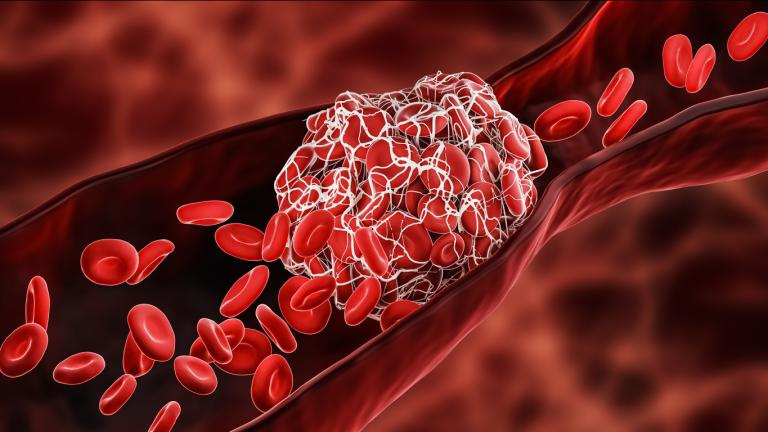
When a blood vessel becomes injured, the coagulation factors or clotting factors in the blood are activated. The clotting factor proteins stimulate the production of fibrin, which is a strong and strand-like substance that forms a fibrin clot. For days or weeks, this fibrin clot strengthens and then dissolves when the injured blood vessel walls close and heal.

Blood clotting is a crucial process that can help prevent blood loss due to injury. If there is an abnormality in any part of the process, it can lead to dangerous complications such as severe blood loss. Commonly, people with clotting disorders are closely monitored to prevent injuries and bleeding.

Coagulation

Coagulation is the formation of a blood clot, and is essential to haemostasis. Haemostasis is the body’s physiological response to damaged blood vessels, to slow down, minimise and eventually cease the bleeding.

The coagulation process is characterised by a cascade of events which lead to the formation of a blood clot. Proteins called clotting factors initiate reactions which activate more clotting factors.

This process occurs via two pathways which unite downstream to form the common pathway. These are:

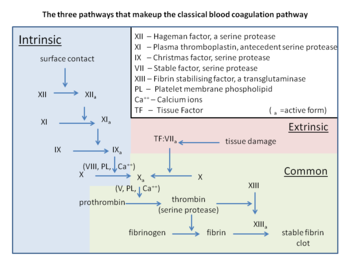
The Extrinsic pathway: This is triggered by external trauma which causes blood to escape the circulation.

The Intrinsic pathway: This is triggered by internal damage to the vessel wall.

Extrinsic Pathway of Coagulation

The extrinsic pathway unfolds as follows:

*Damage to the blood vessel means that factor VII exits the circulation into surrounding tissues.

*Tissue factor (factor III) is released by damaged cells outside the circulation.

*Factor VII and factor III form a complex, known as the TF-VIIa complex.

*TF-VIIa then activates factor X into its active form, factor Xa.

*In conjunction with factor Va, this triggers the formation of thrombin.

Note that the extrinsic pathway is believed to be responsible for the initial generation of activated Factor X (Factor Xa), whereas the intrinsic pathway amplifies its production.

Intrinsic Pathway of Coagulation

The intrinsic pathway is the longer and more intricate pathway:

*Factor XII is activated once it comes into contact with negatively charged collagen on the damaged endothelium, triggering the cascade.

*Along with clotting factors, platelets form a cellular ‘plug’ at the site of injury. These platelets also release mediators that facilitate further clotting, including Factor VIII.

*Factor IX combines with Factor VIII to form an enzyme complex that activates factor X, which along with factor Va, stimulates the production of thrombin.

Common Pathway of Coagulation

The intrinsic and extrinsic pathways converge to give rise to the common pathway. The activated factor X causes a set of reactions resulting in the inactive enzyme prothrombin (also called factor II) being converted to its active form thrombin (factor IIa) by Prothrombinase.

The thrombin then converts soluble fibrinogen (also referred to as factor I) into insoluble fibrin strands. The fibrin strands which comprise the clot are stabilised by factor XIII.

Regulation of Clotting

To prevent excessive clotting and subsequent disease, mediators including Protein C and Protein S provide negative feedback on the clotting cascade.

Protein C is activated following contact by thrombomodulin, which is itself activated by thrombin. Along with co-factors including protein S, activated protein C degrades factor Va and factor VIIIa, thus slowing the rate of clotting.

Calcium ions play a role through their interaction with the activation of several clotting factors. Low levels of calcium are therefore inhibitory to the clotting cascade.

Antithrombin is a protease inhibitor that degrades thrombin, factor IXa, factor Xa, factor XIa and factor XIIa. It is constantly active but can be activated further by a group of common anticoagulants known as heparins.

Restoring Blood Flow – Fibrinolysis

In order for blood flow to be re-established as the blood vessel heals, the thrombus must eventually be degraded. During fibrinolysis, fibrin is dissolved leading to the consequent dissolution of the clot.

The endothelial cells of the blood vessel wall secrete tissue plasminogen activators (tPAs) which convert the precursor plasminogen into plasmin. Plasmin subsequently cleaves the fibrin within the thrombus, leading to its degradation.

tPAs are released very slowly following trauma from the endothelial cells, and therefore there is a substantial time delay until there is a sufficient concentration for fibrinolysis.

Causes of Haemophilia

Cause of Hemophilia

The gene with the instructions for making factor is found only on the sex chromosome labeled X. If the gene is faulty, the result is hemophilia unless there is a dominant, normal gene on a matching X chromosome. Hemophilia is a sex-linked recessive disorder. These kinds of defects occur more often in men than in women. This section will explain all of this in more detail.

Hemophilia Carrier

A daughter gets an X chromosome from her mother and an X chromosome from her father. Suppose the X chromosome from her mother has the gene for normal blood clotting. Suppose the X chromosome from her father has the gene for hemophilia.

The daughter will not have hemophilia since the normal blood clotting gene from her mother is dominant. It won't allow the instructions from the hemophilia gene to be sent.

The daughter is called a carrier for hemophilia. She has the gene on one of her X chromosomes and could pass it on to her children. Does this mean that the mother alone is the one responsible for having a child with hemophilia?

Not really. The mother is the one who passes the hemophilia gene. However, it is the father's sperm that determines if the child will be a boy or a girl. It is not the "fault" of one parent since both parents contribute to the outcome.

All of us have dozens of abnormal genes. We are unaware of most of them. It is purely by chance that a hemophilia gene is passed on to produce a child with hemophilia.

Chances of having a Child with Hemophilia

*No sons of a man with hemophilia will have hemophilia.
*All daughters of a man with hemophilia will be carriers (called obligate carriers).
*If a carrier has a son, the son has a 50% chance of having hemophilia.
*If a carrier has a daughter, the daughter has a 50% chance of being a carrier.

These four points are explained below. The percentage (%) or "risks" are based on large numbers of births. In other words, if 500 carriers each had two sons (1,000 total), we would expect there to be about 500 boys with hemophilia. But in that group there would be women who had two sons with hemophilia, women who had one with and one without, and women with no sons with hemophilia. The gene a child will inherit is based purely on chance and can never be truly predicted.

A child's chances of getting a hemophilia gene do not have anything to do with whether or not brothers or sisters have the gene. Each time a woman is pregnant, her chances of having a child with the hemophilia gene are the same (Figure 2-3). It is like rolling dice. The results of one roll do not affect the next roll.

A family may have children with the hemophilia gene and children without it. It is also possible for all the children in the family to inherit the normal gene or all to inherit the hemophilia gene.

Chances of having a baby with Hemophilia or who is a carrier if?

*the father has hemophilia
*the mother does not have hemophilia and is not a carrier

The father's sex chromosomes are labeled XY, with the X chromosome carrying the hemophilia gene. [In our drawings, we have shown this by putting an H for hemophilia over the X.] The father only passes half of his sex chromosomes to the baby, either the X or the Y.

If the baby gets the Y chromosome from the father it will be a boy. Since the Y chromosome does not carry the hemophilia gene, a son born to a man with hemophilia and a woman who is not a carrier will not have hemophilia.

If the baby gets the X chromosome from the father it will be a girl. The X chromosome from the father with hemophilia will have the hemophilia gene. But the girl also gets an X chromosome from her mother. The normal blood clotting gene on the X chromosome from the mother is dominant, so the baby girl will not have hemophilia. She will, however, be a hemophilia carrier since she has the hemophilia gene on one of her X chromosomes.

*The father does not have hemophilia.
*The mother is a carrier.

The father's sex chromosomes are labeled XY. The father only passes half of his sex chromosomes to the baby, either the X or the Y.

If the baby gets the Y chromosome from the father it will be a boy. The son can get from the mother either her X chromosome with the hemophilia gene or her X chromosome with the normal blood clotting gene.

If the son gets his mother's X chromosome with the hemophilia gene he will have hemophilia. If he inherits his mother's other X chromosome, he will have normal blood clotting. So a carrier's son has a 50% chance of having hemophilia.

A baby girl will inherit an X chromosome with a dominant gene for normal blood clotting from her father. So the daughter will not have hemophilia. A daughter will get either her mother's X chromosome with the hemophilia gene or her mother's X chromosome with the normal gene for clotting. If she gets the X chromosome with the hemophilia gene she will be a carrier. So a carrier's daughter has a 50% chance of being a carrier.

A woman who is a carrier has:

1. a 25% (one in four) chance of having a daughter who is a carrier.
2. a 25% chance of having a son with hemophilia.
3.and a 50% chance of having a child (boy or girl) who does not have the gene for hemophilia at all.

*The father has hemophilia
* The mother is a carrier

The father's sex chromosomes are labeled XY, with the X chromosome carrying the hemophilia gene. The father only passes half of his sex chromosomes to the baby, either the X or the Y.

If the baby gets the Y chromosome from the father it will be a boy. If the boy gets his mother's X chromosome with the hemophilia gene he will have hemophilia. If he inherits his mother's other X chromosome, he will have normal blood clotting.

If the baby gets the X chromosome from the father it will be a girl. The X chromosome from the father with hemophilia will have the hemophilia gene. The girl also gets an X chromosome from her mother. If she gets the normal X chromosome, the girl will be a carrier. If she gets the X chromosome with the hemophilia gene, she will have hemophilia.

A man who has hemophilia and a woman who is a carrier have:

1.a 25% (one in four) chance of having a son with hemophilia.
2.a 25% chance of having a son with normal blood clotting.
3.a 25% chance of having a daughter who is a carrier.
4.a 25% chance of having a daughter who has hemophilia.

In some families, there is no known family history of hemophilia. The hemophilia gene seems to appear from nowhere and the family is shocked and confused.

There are several reasons this could happen. First, the family may not know about or may have forgotten ancestors with hemophilia. Second, the gene for hemophilia may have been passed down by carrier females without anyone knowing. For several generations, the women may have had no boy children or by chance had only normal boys. No one would have known about the hemophilia gene. Third, hemophilia may appear in families with no history of it if the normal blood clotting gene suddenly becomes messed up (a spontaneous genetic mutation).

Gene Mutation

Normally, genes are exactly copied generation after generation. Sometimes, though, a gene may become faulty. It may give different or wrong directions to the body. This change in the gene is called a mutation. The change is permanent - the gene won’t be able to turn back to normal.

The effects of the faulty gene may be noticed right away. Or they might not be seen until the gene is passed on to a baby. So the change in the gene may have happened in the parent or in the baby.

The change in the gene can be caused by something in the environment. It also seems to happen without any clear cause. Since they are nature's way of bringing about change, not all gene mutations are harmful.

The hemophilia gene can occur in a man or woman this way. The blood clotting gene suddenly becomes faulty. The gene may be passed by female carriers for several generations before hemophilia appears in a boy baby.

Probably not. Mutations in blood clotting genes would still happen, making new carriers and new people with hemophilia. It is believed that as many as one-third of the babies born with hemophilia are caused by new gene mutations.

Once the hemophilia gene is present, the chance of passing it on exists. It is possible, however, for hemophilia to disappear from the family tree. This can happen if all family members who have hemophilia or who carry the hemophilia gene give birth to children who by chance do not get the gene.

The clotting factor level will be about the same from one generation to the next. So the daughters of a man with severe hemophilia will all carry the gene for severe. It won’t change to mild or moderate. The same goes for men with mild and moderate hemophilia. Their children will all carry the same level.

Even though the level stays the same, hemophilia can have very different effects on the lives of people in the family. This is due to different lifestyles and treatments for hemophilia. For instance, a grandfather with hemophilia may have very bad joints and walk with a limp because he could not get treatment when he was young. His grandson may be running track on his high school team because early treatment with factor has kept his joints healthy.

Backfire Effect

Backfire Effect 

Introduction

In a perfectly rational world, people who encounter evidence that challenges their beliefs would first evaluate this evidence, and then adjust their beliefs accordingly. However, in reality this is seldom the case.

Instead, when people encounter evidence that should cause them to doubt their beliefs, they often reject this evidence, and strengthen their support for their original stance. This occurs due to a cognitive bias known as the backfire effect.

The backfire effect is important to understand, since it affects both your ability to change other people’s opinion, as well as your ability to process information rationally yourself. As such, in the following article you will learn more about the backfire effect, understand why and when it influences people, and see what you can do in order to mitigate its influence.

Definition

The Backfire Effect is a cognitive bias that causes people who encounter evidence that challenges their beliefs to reject that evidence, and to strengthen their support of their original stance. Essentially, the backfire effect means that showing people evidence which proves that they are wrong is often ineffective, and can actually end up backfiring, by causing them to support their original stance more strongly than they previously did.

As such, the backfire effect is a subtype of the confirmation bias, which is a cognitive bias that can cause people to reject information which contradicts their beliefs, or to interpret information in a way that confirms those beliefs.

Examples

The backfire effect has been observed in a number of scientific studies, which looked at various scenarios:

#A study that examined voting preference showed that introducing people to negative information about a political candidate that they favor often causes them to increase their support for that candidate.

#A study which examined misconceptions about politically-charged topics found that giving people accurate information about these topics often causes them to believe in their original misconception more strongly, in cases where the new information contradicts their preexisting beliefs.

#A study which examined parents’ intent to vaccinate their children, found that giving parents who are against vaccination information showing why vaccinating their child is the best course of action, they sometimes become more likely to believe in a link between vaccination and autism.

#A study which examined people’s intention to vaccinate against the flu, found that giving people who think that the vaccine is unsafe information disproving myths on the topic, they often ended up with a reduced intent to vaccinate.

#Overall, the backfire effect influences people in many domains. It has a notable influence when it comes to people’s widespread support of various pseudoscientific beliefs, and it explains why attempts to debunk those beliefs are often ineffective, though as we saw above, it can also affect people when it comes to any type of belief.

People Experience the Backfire effect

People experience the backfire effect as a result of the process that they go through when they encounter information that contradicts their preexisting beliefs.

Essentially, when a person encounters information which suggests that their current beliefs are wrong in some way, they feel threatened, which causes them to generate a variety of negative emotions. This is especially likely when the beliefs in question are crucial to their self-concept, which means that they represent an important part of that person’s identity and ideology.

The negative emotions that people generate end up negatively impacting their ability to accept the corrective information that they encountered, by increasing the likelihood that they will refuse to process it properly, and by increasing the likelihood that they will attempt to find ways to discount it.

The fact that people often attempt to discount and reject corrective information that they encounter is what leads them to sometimes experience the backfire effect. Specifically, in their attempt to reject corrective information, people will generally first attempt to recall preexisting knowledge that they can use in their arguments, which could cause to reinforce that knowledge in their minds, and therefore increase their support of their preexisting beliefs.

Furthermore, when people argue against unwelcome information strongly enough, they often end up with more arguments to support their stance. This can cause them to believe that there is more proof in support of their viewpoint than there was before they were presented with the unwelcome evidence, which in turn can cause them to support their original stance more strongly than they previously did.

Reducing Backfire Effect

Reducing other people’s backfire effect

The backfire effect is a cognitive bias, meaning that you can use general debiasing techniques in order to counter it effectively. Such strategies include, for example, increasing people’s awareness of this bias, using simpler explanations, and changing the way you present information.

One study, for example, examined people’s opinions regarding federal welfare programs. The researchers found that the majority of people were highly-misinformed about the nature and scope of these programs, and that the people who were the least-informed about them generally expressed the highest degree of confidence in their knowledge.

Furthermore, the researchers found that presenting people with facts about these welfare programs did little to change people’s opinion about them. However, in a follow-up study, the researchers discovered that tweaking the way they presented the facts made people respond more positively to the new evidence.

In this follow-up, people were first asked to estimate the percentage of the national budget that is allocated to welfare. Then, they were also asked what percent of the budget they believed should be spent on welfare.

Posing these questions back-to-back led participants to contrast their perception of reality with their preferred level of spending, before they were told what portion of the budget is spent on welfare in reality. This meant that most of them had to process the fact that not only is the federal-spending lower than they thought, but it is also lower than the portion of the budget that they believed should be allocated to welfare.

Even though this comparison is something that people should have done naturally if they were processing the information rationally, the only thing that got them to do this in reality was to ask them to explicitly state how much they believed should be spent on welfare. Accordingly, people only responded positively to the corrective information when they were asked this preliminary question, which led them to internalize and accept the fact that they were wrong.

This means that when you’re talking to people in an effort to change their stance on something, you need to remember that how you present information is just as important as what information you present, if you want to avoid a backfire effect. As such, you need to display the new information in a non-confrontational manner, that allows people to internalize the new facts, and reach the conclusion that you want them to reach themselves.

Furthermore, if you truly want to get your point across, then remember that attacking the other person for having the ‘wrong’ opinion, no matter how misguided it might be, is unlikely to work, since it will probably just put them in a defensive mindset, where they’re not willing to accept new evidence. This is especially important to keep in mind, because if people perceive you as uncivil or hostile, they are more likely to doubt the validity of your argument, even if the argument itself is rational and well-founded.

Reducing your own backfire effect

In addition to reducing the backfire effect that other people experience, you can also use your understanding of this bias in order to reduce the degree to which you experience it yourself. This necessitates being critical of how you process new information, which will allow you to think in a more rational way and to make better decisions.

The basic way to reduce your own backfire effect is to be aware of its influence, and to modify the way in which you react when you encounter information that contradicts your beliefs.

Specifically, when you encounter such information, you should not ignore it outright or immediately try to explain why it’s wrong. Instead, you should first try and look at it with fresh eyes, and assess it based on its own merit, without comparing it to your preexisting theory on the topic.

Beyond this, you can use the techniques that we saw above, as well as other debiasing techniques that can help you avoid this bias. These techniques revolve primarily around getting you to process new information in a conscious rational manner, instead of reacting to it intuitively, which helps ensure that you will give new information the chance that it deserves.

Caveats about the backfire effect

While the backfire effect plays a significant role in how people process new information, that doesn’t mean that it affects everyone all the time, and studies show that there are cases where the backfire effect doesn’t influence people’s thought process.

This doesn’t necessarily contradict other findings on the topic, since even studies that show support for the existence of the backfire effect demonstrate that its influence is highly variable, and depends on various factors.

Furthermore, since it’s difficult to predict when the backfire effect will play a role in people’s thought process, it’s often advisable to assume that people will experience it, and to act accordingly, in terms of how you present new information.

Overall, while the backfire effect can influence people’s thought process in various situations, it’s not always there. Whether or not people will experience a backfire effect depends on a variety of factors, and since this can be difficult to predict, you should generally be wary, and act in a way that takes its possible influence into account.

Related cognitive biases

In addition to the backfire effect described here (which is sometimes referred to as the worldview backfire effect), there are two other types of backfire effects, that can cause people to strengthen their support for a stance when presented with evidence which contradicts that stance:

*The overkill backfire effect. The overkill backfire effect is a cognitive bias that causes people who encounter a complex explanation to reject it in favor of a simpler alternative, and to sometimes also reinforce their belief in the simpler alternative. For example, the overkill backfire effect could cause people to strengthen their support for a simple myth when presented with an overly-technical scientific refutation of it.

*The familiarity backfire effect. The familiarity backfire effect is a cognitive bias that causes people to remember misinformation better, and to remember it as being true, after they are shown corrective information that is supposed to debunk it, as a result of the increased exposure to that misinformation. For example, the familiarity backfire effect could cause people to strengthen their support for a certain piece of misinformation each time they hear an attempt to refute it.

Summary and conclusions

The backfire effect is a cognitive bias that causes people who encounter evidence that challenges their beliefs to reject that evidence, and to strengthen their support of their original stance.

The backfire effect has been observed in various scenarios, such as in the case of people supporting a political candidate more strongly after negative information about that candidate is released. Furthermore, it often plays a role in people’s belief in pseudoscientific theories, as in the case of people’s belief that vaccines are highly dangerous, and should be avoided.

The backfire effect occurs primarily because when people argue strongly enough against unwelcome information, they end up, in their mind, with more arguments that support their original stance.

If you’re trying to explain to someone the issues with their stance, you can mitigate the backfire effect by presenting new information in a way that encourages the other person to consider and internalize that information, instead of rejecting it outright.

There is variability in terms of when people are influenced by this effect, and there are situations where people don’t experience a backfire effect when they are shown information which contradicts their beliefs. However, since this variability is difficult to predict, it’s better to assume that the backfire effect will play a role in people’s thought process, and to act accordingly.

Sunday, February 4, 2024

Forensic Entomology – Using Insects for Forensic Investigations

Forensic Entomology – Using Insects for Forensic Investigations

Introduction

Forensic Entomology plays a significant role in the investigation of deaths. It is a branch of forensic science that deals with the study of insects for forensic analysis.

What comes to your mind when you hear the word ‘insects’?

The unavoidable creepy, crawly creatures that have always been the patrons of hate and loathe, isn’t it? Insects have always been unwanted on the face of the planet, at least for plebeians like us.

But did you ever wonder why Forensic Scientists have a different level of regard altogether for insects?

These ubiquitous creepy-crawlies actually contain a profound source of vital information for forensic investigators probing serious cases such as murders, accidents, natural deaths, and sexual assaults.

So what is Forensic Entomology? And how are insects used in Forensic Entomology? You will find out in the following sections.

Forensic Entomology - Definition

Forensic Entomology is the application of zoological principles for gaining forensic insights. Study of insects and other arthropods found on and near a cadaver are crucial to estimating the post mortem interval. Post mortem interval i.e. the time that has elapsed since the death of a living being is vital in probing the death of humans and animals.

Post mortem interval is estimated by a scientific evaluation of the insects present at the scene and on the body. It also requires a thorough examination of the environment in which the corpse is found to study the succession patterns of the insects.

Forensic Entomology is particularly useful for conducting forensic investigations in legal and criminal cases. Although it is mostly applied for investigation of a death, it is also helpful in detection of drugs and poisons, determination of the location of an incident and estimation of the time of infliction of wounds.

History of Forensic Entomology

The first instance of insects’ use in Forensic Entomology was in ancient China when a local farmer was found hacked to death.

At a time when forensic science was still in its formative years, all that investigators had was an understanding of the basic principles of the science. This led to the investigators actually inflicting wounds from multiple weapons on an animal carcass.

On comparing the wound with the one on the victim it was conclusive that it was caused by a sickle. Since a sickle was most likely to be used by a peasant, the local magistrate asked all suspected local peasants to gather with their sickles.

The peasant who had assembled at the town square were asked to lay their sickles on the ground. While most stood unaware, the magistrate for sure knew what was in store for the spectators and the guilty!

Primitive Forensic Entomology

As the sickles lay on the ground, bright metallic green flies began gathering over the village square.

Eventually, they started swarming over one hand sickle in particular. This was sufficient for the peasant owning that sickle and the entire village to perceive who the guilty really was.

The metallic colored flies were blow flies that are naturally attracted to the soft tissues, blood, and bones of dead bodies. This was the very first case in the history of forensic science when forensic entomology was used to convict the guilty and serve justice.

Subsequently, forensic entomology and the way insects are used for investigations have evolved significantly lending deeper insights to forensic scientists.

Evolution of Forensic Entomology

Francesco Redi, an Italian physician, refuted the theory of spontaneous generation in 1668. At that time, the incumbent theory was that maggots developed spontaneously from a rotting piece of meat. However, Redi could prove through a series of experiments that it was only when meat was fully or partially exposed to air that it developed fly maggots.

The discovery that maggots did not develop on rotting meat that was not exposed to air brought huge revolution in the world of forensic entomology. It spurred further analysis of insect life cycles and forensic entomology as a whole.

Insects Used in Forensic Entomology

So here’s breaking the mystery. How can something as despicable as insects lend such crucial information to forensic investigators? The following section shall reveal how are insects used in forensic entomology.

Flies:

Flies are among the first insects that are attracted to a corpse. Their offspring, maggots, feed on moist cadavers. Following are the flies that are relevant to forensic entomology.

1.Blow Flies: Blow flies are the ones that have mentioned in the first record of the application of forensic entomology in Song Ci’s book. These metallic looking flies have the ability to smell decaying flesh from up to 16 km away. That’s called as having some real olfactory senses!!

2.Flesh Flies: Flesh flies mostly breed on decaying corpses, garbage, dung or any other decaying material. A few species, however, lay their eggs in the exposed wounds of mammals. Being viviparous in nature, flesh flies often give birth on decaying human and animal corpses.

3.House Flies: They are the most common type of flies and are the carriers of serious diseases as we are all aware!

4.Cheese Flies: These flies are mostly found in animal products and fungi. Their larvae most infest smoked fish, cured meat, cheese and decaying animals. The presence of cheese fly larvae is crucial for estimating the time of death for humans.
Beetles:

Beetles generally infest a corpse in the later stages of decomposition compared to flies. Beetles are replaced by moth flies in drier conditions.

*Dermestid Beetles: Also called as skin or hide beetles, they infest a decomposing cadaver only once the soft tissues have been devoured by other organisms. They thrive on the skin and hair and are one of the most common insects collected by forensic entomologists from human corpses.

*Bone Beetles: These are also collected from corpses in the later stages of decomposition. Beetles belonging to this family (Cleridae) feed on decaying flesh, leaving the skeletal remains immaculately clean!

*Carrion Beetles: The larva of carrion beetles are known to thrive on vertebrate carcasses while the adults devour maggots. These chaps are quite a patron of social service as they have a tendency to dig and inter small carcasses underground.

*Hide Beetles: These feed on decaying carcasses and dry animal products such as bacon, dog treats, dried fish, cheese, and They usually form clusters around resources where feeding and mating are likely to happen.

*Rove Beetles: Rove beetles are different from carrion beetles in a way that they feed on cadavers or carcasses and not on decaying flesh (carrion). They thrive on maggots and other insect larvae present on carrions.

*Scarab Beetles: Scarab beetles belong to the Scarabaeidae family that also includes dung beetles which are generally found on or under carrion and corpses. They feed on fungi, dung or decaying flesh and act as a cleanup crew for the animal kingdom.

*Sap Beetles: These beetles are mostly found near fermenting or decaying plant fluids such as rotting melons or tree sap. Some sap beetles though infest carcasses also and are very crucial in forensic entomology.

*Clown Beetles: Also known as Hister beetles, these beetles are smart players. They usually hide under the carcass during the day to emerge at night and feed on maggots or dermestid beetle larvae thriving on it.

*Dung Beetles: These beetles thrive and feed on carrion. Their larvae feed on decaying fungi, manure and vertebrate carcasses at any stage of the decomposition.

*Mites: Macrocheles mites feed on carcasses in the early stages of the decomposition whereas Tyroglyphidae and Oribatidae mites thrive on dry skin later in the decomposition process.

*Moths: The larvae of moths that are active primarily during twilight and daytime feed on the hair of mammalian corpses and are amongst the last animals joining in the decomposition of a corpse.

Application of Forensic Entomology for Investigations Other than Death

#Food Infestation Cases: Food production facilities where Integrated Pest Management procedures are not followed can be quite enticing for pests. Cases involving the contamination of food products with insect debris call for the involvement of a forensic entomologist to investigate and provide litigation support.

#Presence of Drugs: An analysis of the bodies, feces and dead skins of insects feeding on carrion and cadavers helps forensic entomologist determine the presence and type of drugs or poison in the body.

#DNA Extraction: Blood-sucking insects consume blood that makes it possible for a forensic scientist to use it for extraction of DNA. This is helpful in cases where the assailant leaves a bite-mark evidence.

Wednesday, January 31, 2024

Haemophilia

Haemophilia 

Key facts

#Haemophilia is an inherited bleeding disorder, which means it can be passed on from birth parents to their children.

#If you have haemophilia, your blood doesn’t clot properly, which makes it difficult to control bleeding.

#Some people have mild haemophilia, while others are more severely affected.

#The main symptoms of haemophilia are easy bruising, having large bruises, and greater than normal bleeding from surgery or menstruation.

#There is no cure for haemophilia, but heavy bleeding can be controlled with medical treatment.

Introduction

Haemophilia is an inherited bleeding disorder, which means it can be passed on from birth parents to their children. If you have haemophilia, your blood doesn’t clot properly. This can lead to bleeding that is difficult to control.

When a blood vessel is injured, special proteins in the blood called ‘clotting factors’ act to control blood loss by plugging or patching up the injury. People with haemophilia have lower than normal levels of a clotting factor.

Types of Haemophilia

There are 2 types of haemophilia.

1.Haemophilia A (also called classic haemophilia) is the most common type. It is caused by a lack of clotting factor 8.

2.Haemophilia B (sometimes called Christmas disease) is caused by a lack of clotting factor 9.

It is important to know the type of haemophilia you have, as each type requires different clotting factor treatment.

Some people have mild haemophilia, while others are more severely affected.

Symptoms of Haemophilia

The main signs of haemophilia are:

*Easy bruising from an early age.

*Internal bleeding for no obvious reason, especially in the joints and muscles.

*Greater than normal bleeding following injury or surgery.

*Abnormally heavy bleeding during menstruation or after giving birth.

Although bleeding problems often start from a very young age, some children don’t have symptoms until they begin walking or running. People with mild haemophilia may not bleed excessively until they get an injury or have surgery.

Causes of Haemophilia

Haemophilia is an inherited condition and occurs in families, but 1 in 3 people with haemophilia will have it even without a family history of the disorder.

Haemophilia is caused by a mutation in a gene that is located on the X chromosome.

Females have 2 copies of the X chromosome in body cells, while males have one X chromosome and one Y chromosome. For this reason, haemophilia is much more common in males. Females who inherit a gene for haemophilia often have an unaffected gene on their other X chromosome. This means that they while they can pass on the gene for haemophilia to their children (be a genetic carrier), they may not be affected by haemophilia themselves.


Diagnosis

If your doctor suspects that you have haemophilia, they may refer you for blood tests to measure the levels of clotting factors in your blood. These tests can show the type and severity of the disease.

Genetic testing can often confirm a diagnosis of haemophilia, but in some cases, doctors won’t know if you have a gene mutation.

Treatment

There is currently no cure for haemophilia. It is possible to manage haemophilia effectively, although it can be complex.

When someone with haemophilia has a bleeding episode, they will need treatment to help their blood clot and stop the bleeding. This usually involves giving clotting factors by infusion or injection.

If you have haemophilia, you need to be very careful not to injure yourself. Be sure to learn how to recognise a bleed, as there may be no visible signs of bleeding, for example, if your bleed inside your body.

Australian guidelines recommend that people with haemophilia get care from a team of healthcare professionals. This team may include doctors (GPs and/or specialists) nurses, medical scientists, physiotherapists, social workers and psychologists.

If you are diagnosed with haemophilia, you should ask your doctor about the benefits of referral to a haemophilia treatment centre, where a health team can provide you with comprehensive care.

Complications of Haemophilia

The most common complication of the haemophilia is damage to joints and muscles that result from bleeding into these areas. These complications are best managed by a multidisciplinary health care team.

Saturday, January 27, 2024

Phobias


Phobias

Introduction

Phobias are an intense fear of something, like heights or certain animals, that causes significant distress. They’re typically treated with therapy, medication, or a combination of both.

A phobia is an irrational fear of something that’s unlikely to cause harm. The word itself comes from the Greek word“phobos,” which means “fear” or “horror.”

Hydrophobia, for example, literally translates to fear of water.

When someone has a phobia, they experience intense fear of a certain object or situation. Phobias are different from regular fears because they cause significant distress, possibly interfering with life at home, work, or school.

People with phobias actively avoid the phobic object or situation, or they endure it with intense fear or anxiety.

Agoraphobia, a fear of places or situations that trigger fear or helplessness, is singled out as a particularly common fear with its own unique diagnosis. Social phobias, which are fears related to social situations, are also singled out with a unique diagnosis.

Phobias come in all shapes and sizes. Because there are an infinite number of objects and situations, the list of specific phobias is quite long.

Types of phobias

According to the DSM-5, specific phobias typically fall within five general categories:

*Fears related to animals (spiders, dogs, insects)

*Fears related to the natural environment (heights, thunder, darkness)

*Fears related to blood, injury, or medical issues (injections, broken bones, falls)

*Fears related to specific situations (flying, riding an elevator, driving)

*Other (fear of choking, loud noises, drowning)
These categories encompass an infinite number of specific objects and situations.

There’s no official list of phobias beyond what’s outlined in the DSM-5, so clinicians and researchers create names for them as the need arises. This is typically done by combining a Greek (or sometimes Latin) prefix that describes the phobia with the –phobia suffix.

For example, a fear of water would be named by combining “hydro” (water) and “phobia” (fear).

There’s also such a thing as a fear of fears (phobophobia). This is actually more common than you might imagine.

People with anxiety disorders sometimes experience panic attacks when they’re in certain situations. These panic attacks can be so uncomfortable that people do everything they can to avoid them in the future.

For example, if you have a panic attack while sailing, you may fear sailing in the future, but you may also fear panic attacks or fear developing hydrophobia.

List of phobias

Studying specific phobias is a complicated process. Most people don’t seek treatment for these conditions, so cases largely go unreported.

These phobias also vary based on cultural experiences, gender, and age.

Here’s a look at some phobias that have been identified.

1.Achluophobia - Fear of darkness
2.Acrophobia - Fear of heights
3.Aerophobia - Fear of flying
4.Agoraphobia - Fear of public spaces or crowds
5.Aichmophobia - Fear of needles or pointed objects
6.Ailurophobia - Fear of cats
7.Alektorophobia - Fear of chickens
8.Algophobia - Fear of pain
9.Amaxophobia - Fear of riding in a car
10.Androphobia - Fear of men
11.Anginophobia - Fear of angina or choking
12.Anthophobia - Fear of flowers
13.Anthropophobia - Fear of people or society
14.Aphenphosmphobia - Fear of being touched
15.Arachnophobia - Fear of spiders
16.Arithmophobia - Fear of numbers
17.Astraphobia - Fear of thunder and lightning
18.Ataxophobia - Fear of disorder or untidiness
19.Atelophobia - Fear of imperfection
20.Atychiphobia - Fear of failure
21.Autophobia - Fear of being alone
22.Bacteriophobia - Fear of bacteria
23.Barophobia - Fear of gravity
24.Bathmophobia - Fear of stairs or steep slopes
25.Batrachophobia - Fear of amphibians
26.Belonephobia - Fear of pins and needles
27.Bibliophobia - Fear of books
28.Botanophobia - Fear of plants
29.Cacophobia - Fear of ugliness
30.Catagelophobia - Fear of being ridiculed
31.Catoptrophobia - Fear of mirrors
32.Chionophobia - Fear of snow
33.Chromophobia - Fear of colors
34.Chronomentrophobia - Fear of clocks
35.Cibophobia - Fear of food
36.Claustrophobia - Fear of confined spaces
37.Coulrophobia - Fear of clowns
38.Cyberphobia - Fear of computers
39.Cynophobia - Fear of dogs
40.Dendrophobia - Fear of trees
41.Dentophobia - Fear of dentists
42.Domatophobia - Fear of houses
43.Dystychiphobia - Fear of accidents
44.Emetophobia - Fear of vomiting
45.Entomophobia - Fear of insects
46.Ephebiphobia - Fear of teenagers
47.Equinophobia - Fear of horses
48.Gamophobia - Fear of marriage or commitment
49.Genuphobia - Fear of knees
50.Glossophobia - Fear of speaking in public
51.Gynophobia - Fear of women
52.Heliophobia - Fear of the sun
53.Hemophobia - Fear of blood
54.Herpetophobia - Fear of reptiles
55.Hydrophobia - Fear of water
56.Hypochondria - Fear of illness
57.Iatrophobia - Fear of doctors
58.Insectophobia - Fear of insects
59.Koinoniphobia - Fear of rooms full of people
60.Leukophobia - Fear of the color white
61.Lilapsophobia - Fear of tornadoes and hurricanes
62.Lockiophobia - Fear of childbirth
63.Mageirocophobia - Fear of cooking
64.Megalophobia - Fear of large things
65.Melanophobia - Fear of the color black
66.Microphobia - Fear of small things
67.Mysophobia - Fear of dirt and germs
68.Necrophobia - Fear of death or dead things
69.Noctiphobia - Fear of the night
70.Nosocomephobia - Fear of hospitals
71.Nyctophobia - Fear of the dark
72.Obesophobia - Fear of gaining weight
73.Octophobia - Fear of the number 8
74.Ombrophobia - Fear of rain
75.Ophidiophobia - Fear of snakes
76.Ornithophobia - Fear of birds
77.Papyrophobia - Fear of paper
78.Paruresis - Fear of urinating in public places or in the presence of others
79.Pathophobia - Fear of disease
80.Pedophobia - Fear of children
81.Philophobia - Fear of love
82.Phobophobia - Fear of phobias
83.Podophobia - Fear of feet
84.Pogonophobia - Fear of beards
85.Porphyrophobia - Fear of the color purple
86.Pteridophobia - Fear of ferns
87.Pteromerhanophobia - Fear of flying
88.Pyrophobia - Fear of fire
89.Samhainophobia - Fear of Halloween
90.Scolionophobia - Fear of school
91.Selenophobia - Fear of the moon
92.Sociophobia - Fear of social evaluation
93.Somniphobia - Fear of sleep
94.Tachophobia - Fear of speed
95.Technophobia - Fear of technology
96.Thalassophobia - Fear of deep water
97.Tonitrophobia - Fear of thunder
98.Trypanophobia - Fear of needles or injections
99.Trypophobia - Fear of clustered patterns of holes
100.Venustraphobia - Fear of beautiful women
101.Verminophobia - Fear of germs
102.Wiccaphobia - Fear of witches and witchcraft
103.Xenophobia - Fear of strangers or foreigners
104.Zoophobia - Fear of animals

Treating a phobia

Phobias are typically treated with therapy, medication, or a combination of both:

Exposure therapy. During exposure therapy, which is a type of cognitive behavioral therapy, you work with a psychologist to learn how to desensitize yourself to the object or situation that you fear. The goal is to improve your quality of life so that you’re no longer hindered or distressed by your fear.

Antianxiety medication. Your doctor may recommend certain anxiety-reducing medications that can help you through exposure therapy. While these medications aren’t exactly a treatment for phobias, they can help make exposure therapy less distressing.

Other medications. Your clinician might also prescribe beta-blockers and benzodiazepines to manage feelings of anxiety or panic.

The Takeaway

Phobias are persistent, intense, and unrealistic fears of a certain object or situation. Specific phobias are related to certain objects and situations. They typically involve fears related to animals, natural environments, medical issues, or specific situations.

While phobias can be extremely uncomfortable and challenging, therapy and medication can help. If you think you may have a phobia that’s causing a disruption in your life, speak with your doctor for an evaluation and treatment options.

Friday, January 26, 2024

Trephination

Trephination

Introduction:

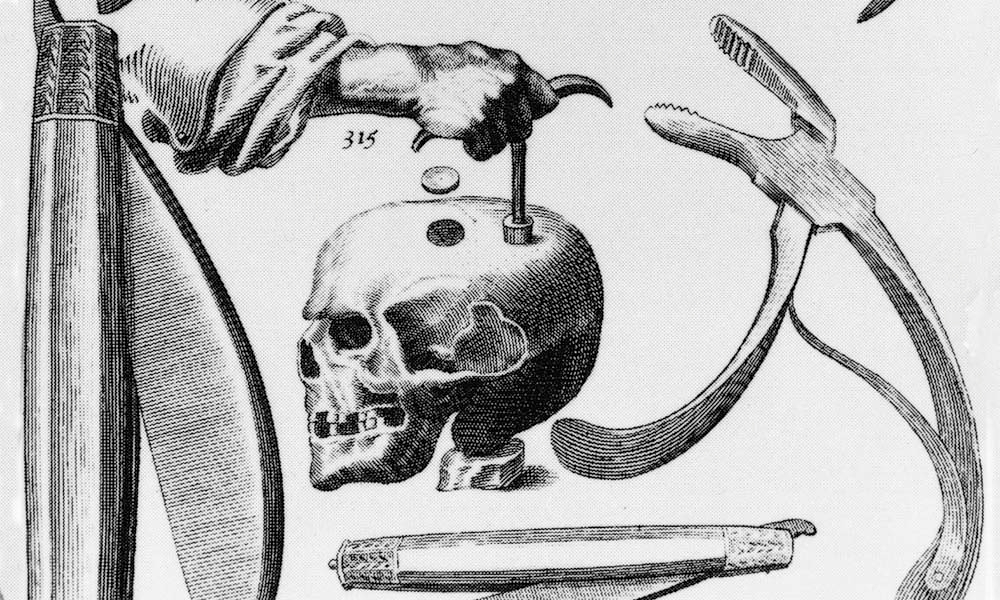
Trephination, also known as trepanning, trepanation or burr holing, is one of the oldest surgical procedures known to humanity and refers to a surgical procedure in which a circular piece of bone is drilled and excised, most commonly from the human skull. While the term trephination typically refers to the creation of a hole in the skull, there are other uses of trephination, such as in the fingernail or toenail. 

Trephination of the skull can be performed while the person is living or dead (i.e., postmortem). It has been performed in many areas of the world and throughout history, spanning from Mesolithic (i.e., prehistoric) to modern times. 

Today, there are four techniques that can be used for trephination: drilling using a trephine (i.e., surgical instrument with a cylindrical blade) or drill, scraping using an abrasive instrument, cutting using an incisive instrument, or boring and cutting using a drill and an incisive instrument. Complications that may arise during trephination include brain injury, hemorrhage, and infection. 

Trephination Uses:

Throughout history, trephination has been a medical technique used to relieve intracranial pressure and headaches. In the fifth century BCE, physicians practicing under the guidance of Hippocrates believed that stagnant blood, like stagnant water, could decay and turn into pus (i.e., liquid produced in infected tissue). For that reason, trephining allowed blood to flow out before it spoiled. This eventually fell out of practice due to low survival rates and infection. 

At the end of the 19th century, physicians learned about the importance of modern antisepsis and infection prophylaxis, and understood the importance of intracerebral pressure in head injury. 

This allowed trephination to return as a surgical therapy for the treatment and management of head trauma, including fractured skulls, head wounds, intracranial hemorrhage, intracranial disorders, chronic headache, brain tumors, and other painful skull disorders. 

Trephining is no longer used for therapeutic purposes in itself, but is typically used for exploratory diagnosis, relieving intracranial pressure due to epidural or subdural hematoma, debriding a penetrating head wound, and gaining access to the brain. 

In modern practice, the technique of drilling a hole in one’s skull is more commonly known as a craniotomy. In this procedure, a surgeon removes a piece of the skull to access the brain in order to treat conditions such as brain lesions and brain tumors. 

After treatment, the piece of skull is then replaced as soon as possible. It is important that, in the process of trephination, surgeons are careful to avoid penetration of the dura mater, which is the outer layer of connective tissue that protects the brain. If the dura mater is damaged, this could result in infection and physical damage to the underlying blood vessels, meninges, and brain tissue.

In 1884, frontal sinus trephination for the treatment of frontal sinus disease was described by physician Alexander Ogston. The technique had a high failure rate from complications of nasofrontal duct stenosis, or blockage of a duct that drains the sinuses. 

In the 1980s, endoscopic sinus surgery became the standard of care for the surgical management of frontal sinus disease. During this procedure, an endoscope (i.e., a camera on the end of a thin tool) is inserted into the nose to open the drainage pathways of the sinuses and restore their function. 

While endoscopy is still the standard of care to date, trephination may be used in cases of frontal sinus disease that are unable to be treated by endoscopy. For example, trephination is used if the surgeon needs an additional port for dissection, if the surgeon needs to rapidly decompress the frontal sinus, or if there is a tumor that has to be resected but cannot be done by endoscopy. 

Frontal sinus trephination is performed under local or general anesthesia. In the case of frontal sinus disease, trephination is used to relieve the pressure of the frontal sinus and drain the inflammatory cells and fluid. Following trephination, intravenous antibiotics are then administered to limit potential infection. 

In addition to treating frontal sinus disease, trephination has been used in the eye for corneal transplant and to treat glaucoma. Glaucoma is a condition in which the outflow of aqueous fluid of the eye is blocked, and intraocular pressure, or pressure within the eye, builds up. 

A procedure known as corneoscleral trephination has been documented in the treatment of glaucoma and consists of using a 1-2mm blade and topical anesthetic to relieve pressure of the eye. 

Lastly, while trephination mainly refers to the process of creating a hole in the human skull, the process of creating a hole in the fingernail or toenail is also referred to as trephination. Trephination of the nail is used as a procedure for subungual hematomas (i.e., blood under the nail). 

Subungual hematomas can occur from trauma, such as crushing one’s finger in a door or stubbing one's toe. Typically, an electric cautery tool is used to melt a hole through the nail and drain the blood from under the nail. Clinicians may also choose to use a needle and rotate it back and forth with slight downward pressure until dark blood is noted, being careful to not damage the nail bed. 

Important facts:

Trephination refers to the process of creating a hole in the skull and, in specific cases, the nail and is one of the oldest surgical procedures documented to date. It has been used throughout history with the goal of relieving pressure; managing symptoms of head trauma, such as subdural and epidural hematomas; and accessing brain tumors. 

Trephination can be performed using a trephine, a drill, by scraping with an abrasive instrument, or cutting with an incisive instrument. Common complications that may arise with trephination include infection and, if the dura mater surrounding the brain is damaged in the process, damage to the underlying blood vessels, meninges, and brain. Modern medicine has used trephination as part of treatments for frontal sinus disease, glaucoma, and subungual hematomas. 

Monday, January 15, 2024

Myopia

Myopia

Introduction

The structure of your eye is to blame. When your eyeball is too long or the cornea -- the protective outer layer of your eye -- is too curved, the light that enters your eye won’t focus correctly. Images focus in front of the retina, the light-sensitive part of your eye, instead of directly on the retina. This causes blurred vision. Doctors call this a refractive error.

High myopia: It’s a more serious form of the condition, where the eyeball grows more than it is supposed to and becomes very long front to back. Besides making it hard to see things at a distance, it can also raise your chance of having other conditions like a detached retina, cataracts, and glaucoma.

Degenerative myopia: Also called pathological or malignant myopia, it is a rare type you usually inherit from your parents. Your eyeball gets longer very quickly and causes severe myopia, usually by the teenage or early adult years. This type of myopia can get worse far into adulthood. Besides making it hard to see things at a distance, you may have a higher chance of having a detached retina, abnormal blood vessel growth in the eye (choroid neovascularization), and glaucoma.

Symptoms

Chances are the only symptom is that more distant objects are blurred. You may also notice:

Headaches
Squinting
Eye strain
Eye fatigue when you try to see objects more than a few Feet away
Children with myopia often have trouble reading the blackboard at school.

Diagnosis and Treatment

An eye exam can show you if you’re myopic. Glasses, contacts, or refractive surgery can usually correct the problem.

When you have myopia, your prescription for glasses or contact lenses will be a negative number. The more negative the number, the stronger your lenses will be. For example, -3.00 is stronger than -2.50.

Your prescription helps the eye focus light on your retina. That clears up your vision.

Eye surgery can improve your vision so much you may no longer need to wear glasses or contacts. The most common procedures for myopia are:

Photorefractive keratectomy: Also called PRK, this surgery uses a laser to sculpt the middle layer of your cornea. That flattens the cornea’s curve and lets light rays focus closer to or on your retina.

LASIK: This is the most common surgery for myopia. The surgeon uses a laser or another tool to create a thin flap on the top layer of your cornea. They sculpt the cornea with another laser and move the flap back into place.

EVO Implantable Collamer Lens (ICL): Using a microscopic incision, a contact lens made of a soft, polmeric materialis implanted into your eye between you natural lens and your iris. It helps refract light on the retina, producing clearer vision.

In the case of high myopia, special contacts or atropine eyedrops have been found to be effective in slowing the progression. In some cases, your doctor may suggest cataract or clear lens replacement surgery. 

Does It Get Better Over Time?

Myopia runs in families and will probably start in childhood. Multifocal lens (glasses or contacts) and eye drops such as atropine, pirenzepine gel, or cyclopentolate can help slow the progression. Your eyes usually stops changing after your teenage years, but not always. The incidents of myopia have been rising at an alarming rate in recent years. If you notice changes in your vision, get your eyes checked. See your eye doctor every year.

Optics of Myopia

Before discussing Optics of Myopia we should ratify parishioner phrase in Myopia. Briefly, the uncorrected myopia or nearsighted person. Usually can see up close better than far away. Hence, the term “nearsighted” make sense.

Derived from two Greek root words from myein “to shut” – ops “eye”.

Myopia is the refractive state of the eye in which with normal tonic accommodation, the parallel rays of light are brought to a focus on a point in front of the retinal plane when the eye is at rest.

In myopia the eyeball is usually deformed ; the deformation occurs at the posterior part of the globe only ,the anterior part is normal. The eyeball is usually large and looks prominent. When adducted the equator can be seen.

Refractive Error Definition 

A refractive error is a very common eye disorder . It exists when the rays of light do not focus on the retina means the eye cannot clearly focus the images from the outside world .

The eye’s optical system is to powerful over converging light in front of the retina . ( Myopia/Nearsighted)

The result of refractive errors is blurred vision, double vision , haziness or eye strain . which is sometimes so severe that it causes visual impairment .

Optics of Myopia: In myopes a near object may be focused without any effort of accommodation if it is situated at the punctum remotum . The image on the retina of an object at infinity is made up of circles of diffusion formed by divergent beam. 

In view of the absence of sharp focus the distant objects appear blurred. The nodal point in myopes is farther away from the retina and the image formed is larger in size which partly compensates for the blur due to absence of sharp focus . 

Accommodation is of little value to myopes, as any exercise of accommodation would only accentuate his visual problem . It would neither increase his vision nor reduce his myopia . In higher errors of refraction the amplitude of accommodation is small. 

The patient has no incentive to improve it and convergence does not get an accommodative influence . All these factors result in fatigue of accommodation and eye strain. Due to dissociation of convergence and accommodation exophoria commonly occurs and this may ultimately break into exotropia.

The eye of simple myopia is large and prominent. The Anterior chamber is deeper than normal and the pupil reacts sluggishly to light. The macula is slightly nearer to the disc than in a normal eye . 

The visual axis gets so altered that in some cases the angle alpha becomes slightly negative which gives an impression of a convergent squint . In myopia more commonly one sees a divergent strabismus.

Optical System 

The optical system is too powerful for it’s axial length , over converging light in front of the retina ( myopia / nearsighted).

Image of Distant Object 

Image of distant object on retina is made up of circle of diffusion formed by divergent beam since the parallel rays of light coming from the infinity are focused in front of the retina.

Far Point of the Myopic Eye : Far point is finite point in front of eye . The far point of myopic eye is 70 cm.

Nodal Point : Nodal point is further away from retina . The nodal point of human eye is located 17 mm in front of the retina.

Accommodation : Accommodation in uncorrected myopes is not developed normally , they may suffer from convergence insufficiency , exophoria and early presbyopia as they grow.

Image Formation: In myopia image formed in front of eye which is corrected by placing the negative lenses .

Optical Treatment : Include prescription of appropriate concave lens minimum acceptance providing maximum vision should be prescribed .

Never Overcorrected myopia

Guidelines For Correcting Low Degree Of Myopia Upto-6D :

Children younger than 8yrs should be fully corrected and instructed to use their glasses constantly.

Adult younger than 30 years :

Usually accept their full correction .

Older than 30 years :

Not able to tolerate a full correction with which the patient feels comfortable .

Prescribe less than full correction with which the patient feels comfortable.

Reverse Transcription

Reverse Transcription Introduction Reverse transcription is the synthesis of DNA from an RNA template. This process is driven by RNA-depende...